Da Yang Journal
Notes on Material,
Time, and Making
A quiet record of wood, resin, light, and the decisions that shape an object by hand.
Journal is a place for observations rather than announcements. It follows materials from their raw state through the workshop, preserving moments that often disappear once an object is complete.
Featured Essay
The Material Leads
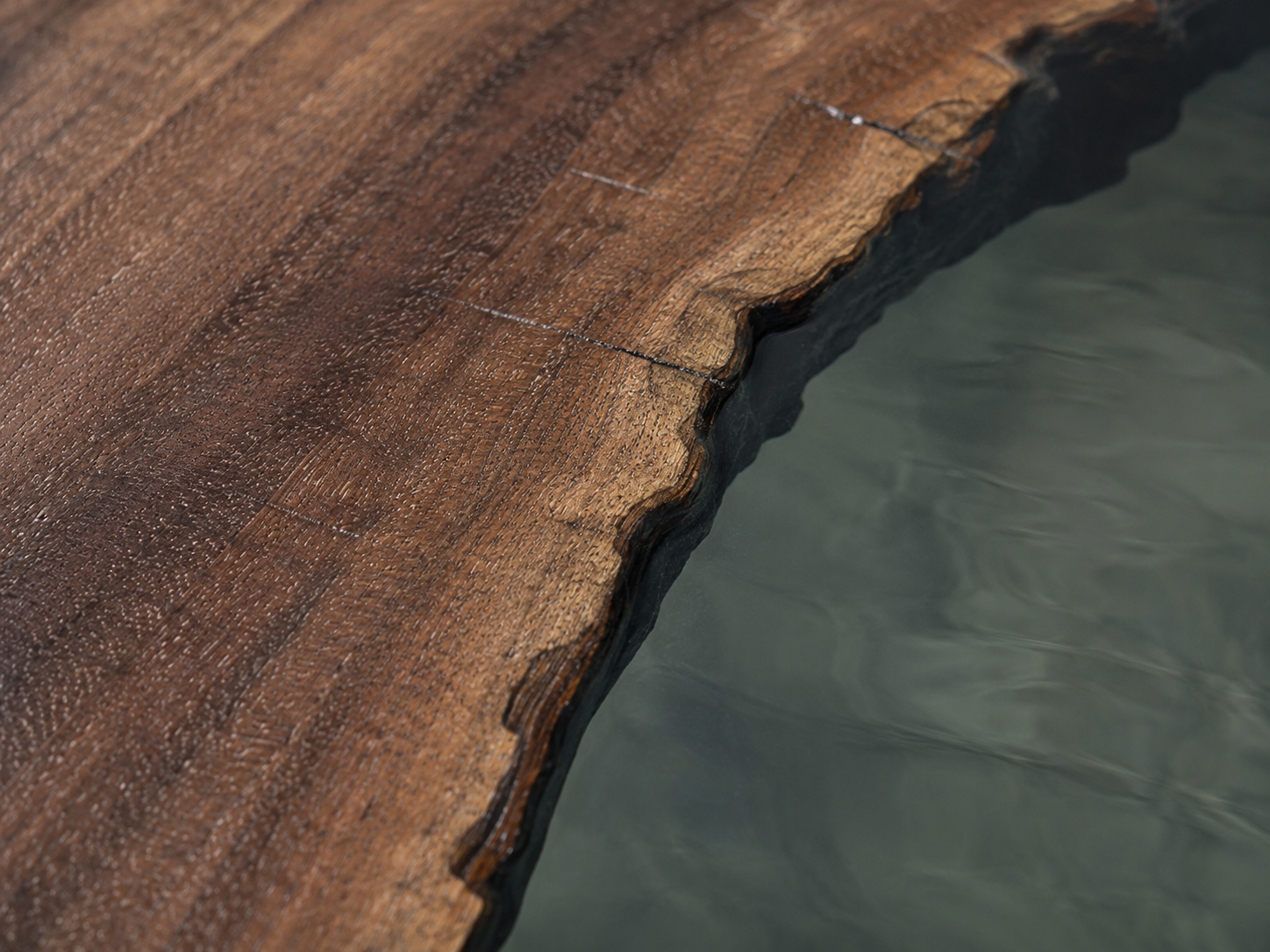
A piece of walnut is never an empty surface. Before it enters the workshop, growth has already drawn a direction through it.
The grain turns where the tree once answered wind or weight. A darker passage may hold years of slower growth; a check may show where tension found release. Along the edge, the line moves without reference to a ruler. These are not details applied to the wood. They are the material’s first decisions, present before our own.
Work begins with looking. We study tone, density, pores, and the places where the board resists an easy outline. This takes time because the first idea is not always the right one. A strong curve may deserve to remain untouched. A damaged area may ask to be removed. Between those choices lies the character of the finished object.
Intervention is necessary, but control has limits. Cutting establishes proportion. Planing and sanding clarify the surface. Oil deepens the existing color and makes the grain easier to read. None of these acts gives the walnut its life. Their purpose is to reveal what can be carried forward and to leave enough quiet around it.
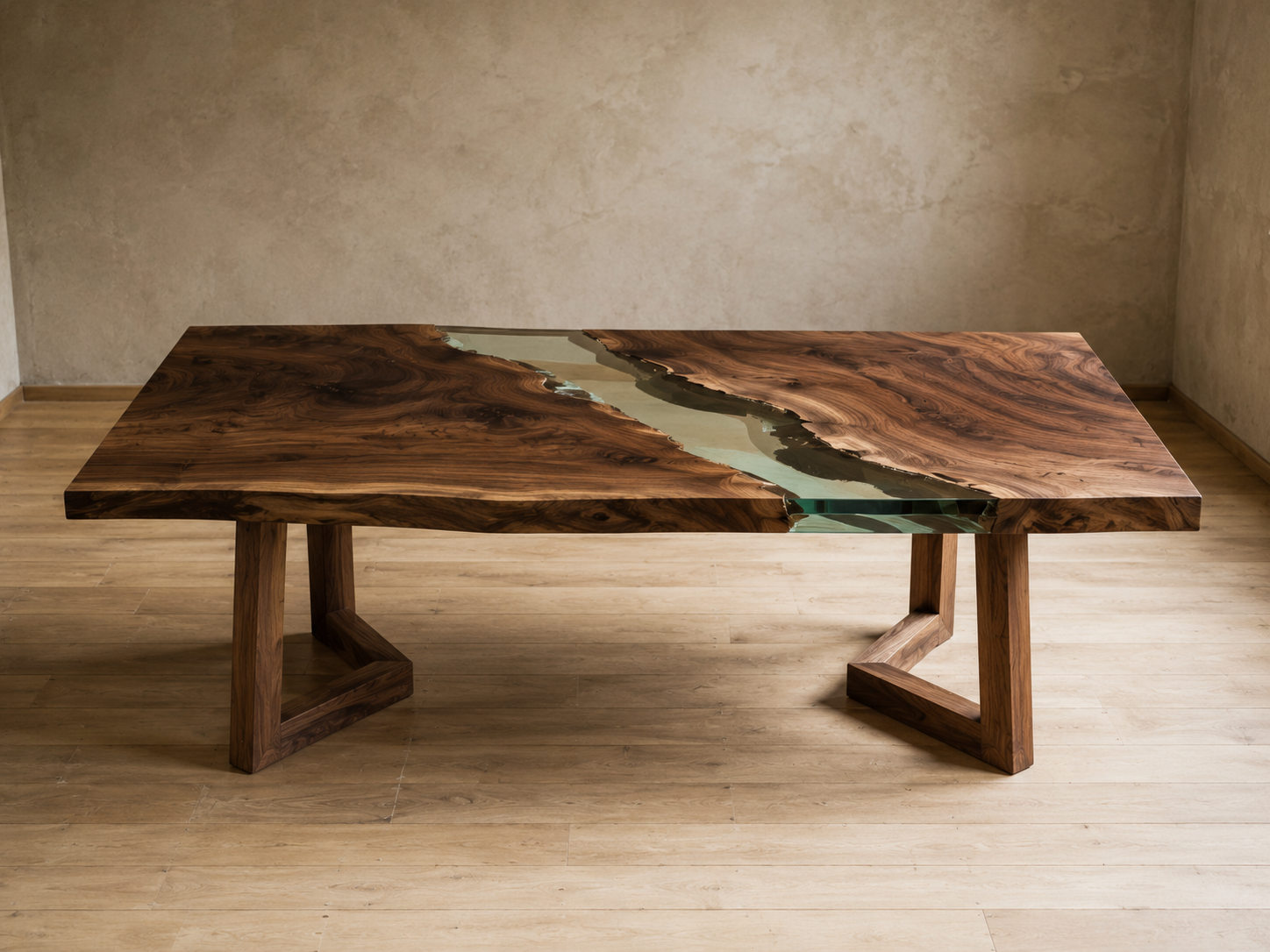
Clear resin enters as a second material, not as decoration. It moves into an irregular boundary and holds the space that the tree did not fill. At one angle it appears almost absent. At another it gathers a reflection, a shadow, or the color of the room. Its depth can connect separated edges while allowing each edge to remain distinct.
Working with it changes the pace of the room. After a pour, movement gives way to observation. The material must settle, and the boundary must be watched without being disturbed. What appears clear from above may hold a different depth from the side. Patience here is not a romantic idea; it is the practical condition that allows the next decision to be made with care.
Touch returns when the surface is ready. The progression from a worked plane to a finished one happens through small changes that are easier to feel than to describe. The palm notices a raised transition before the eye does. A fingertip finds an edge that needs one more pass. Sight and touch correct one another until neither material feels secondary.
The meeting between wood and resin is where many small judgments become visible. Too much correction can make the line feel generic. Too little attention can leave it unresolved. The hand returns repeatedly to this boundary, checking it with sight and touch. The aim is not a perfect seam, but a transition that feels calm and inevitable.
When the object is complete, the material still leads. Light moves through the resin and across the walnut during the day. Use adds marks that could not be planned in the workshop. Time shifts tone and surface. Making gives the materials a form, then releases that form into conditions beyond the maker’s control.
Three Observations
Material Notes
Short studies of grain, transparency, edges, and the marks that remain visible after making.
Note 01
Black Walnut
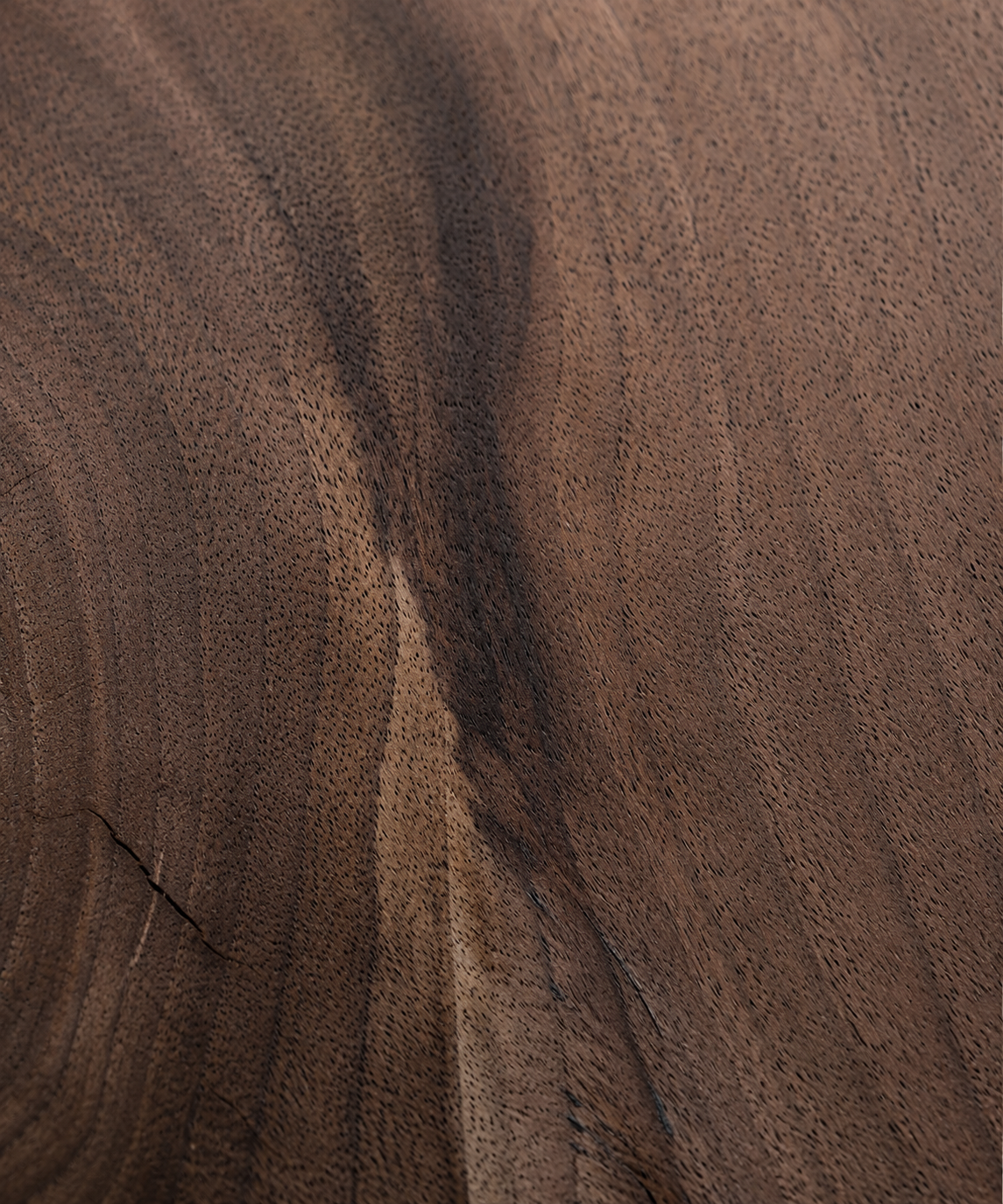
Grain is not surface decoration. It records growth, pressure, weather, and time.
Walnut moves between warm brown, smoke, and near-black without asking for uniformity. Grain direction changes how each passage catches light, while open pores keep the surface visually alive at close range. Natural checks can become quiet points of tension rather than flaws to erase. Sanding brings clarity, but it must not flatten every trace of the board’s earlier life. When oil is applied with restraint, it does not disguise the wood beneath a new color. It reveals contrast already present: a darker line, a softer band, the subtle shift where growth changed course.
Note 02
The Living Edge
An irregular boundary asks for attention before it asks for correction.
The edge is where walnut and resin negotiate their difference. One is opaque and fibrous; the other holds light and exposes depth. Preserving the meeting point does not mean leaving every contour untouched. Loose material must be removed, transitions resolved, and the hand guided along a line that may change unexpectedly. Restraint matters because too much shaping turns a particular edge into a familiar curve. The remaining irregularity gives physical depth to the surface and lets the original boundary continue to speak through the finished form.


Note 03
Clear Resin
Transparency is never empty. It gathers reflection, shadow, depth, and the changing color of its surroundings.
Clear resin appears quiet until light begins to move through it. A reflection rests on the surface while another shape seems suspended below. Edges shift through refraction, and the color of the room enters the material without becoming fixed inside it. This changing character is why restraint is important. Resin does not need added spectacle; its depth already alters with position, daylight, and use. Treated as a material rather than an effect, it can hold an irregular space and give the walnut beside it enough room to remain distinct.
Making Philosophy
Attention before intention.
“We do not begin by asking what the material can become. We begin by noticing what it already carries.”
A note from the workshop
Making is a conversation between intention and resistance. The object becomes clear through a sequence of small decisions: where to follow, where to refine, and where to stop.
Đắk Nông, Vietnam
Workshop Fragments
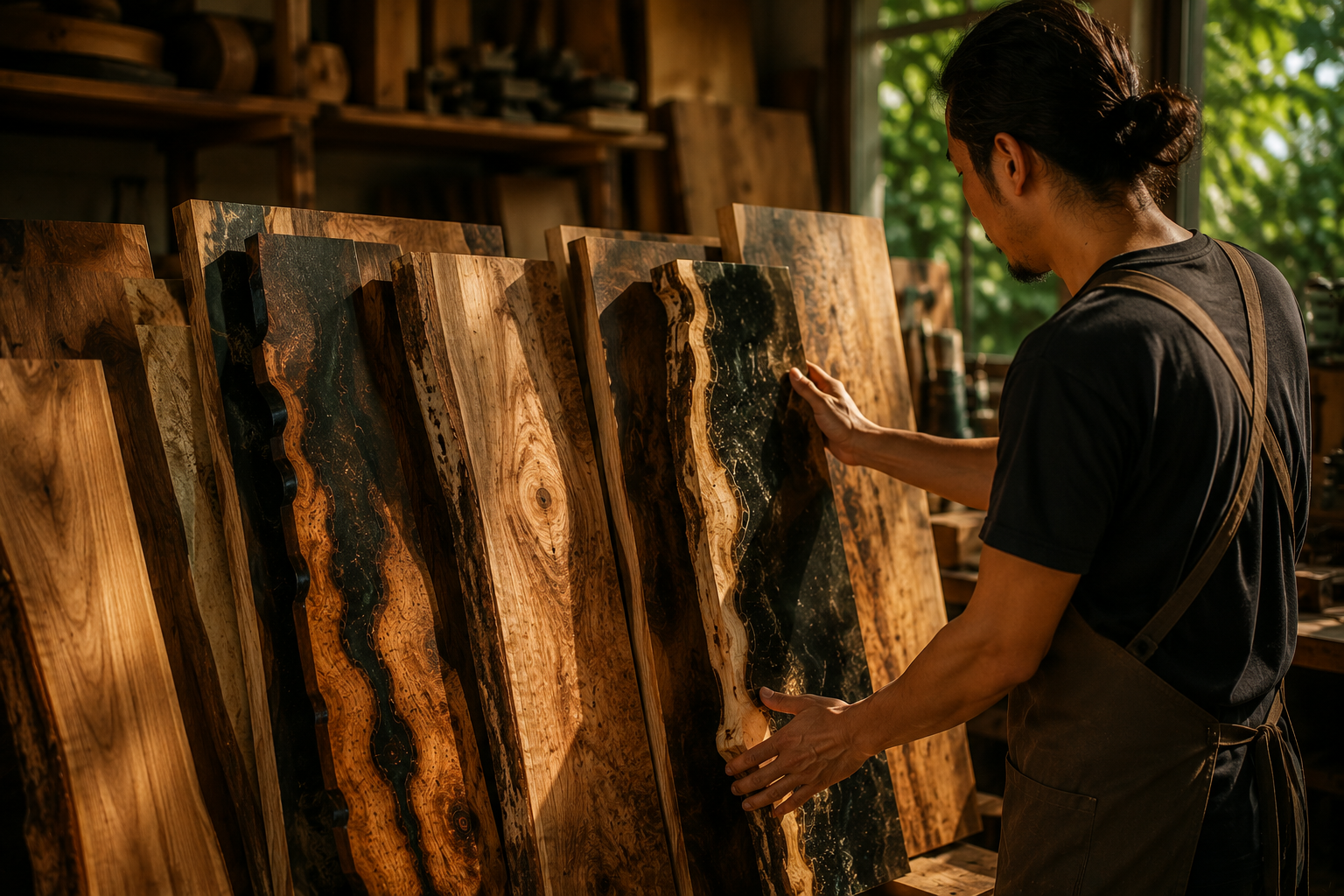
The workshop is shaped by repetition: measuring, waiting, sanding, observing, and returning to the same surface under a different light.
01
Morning Light
Early light enters before the day gathers heat. It travels slowly across the bench, revealing a shallow scratch or a change in grain that overhead light can miss.
02
The Working Surface
The bench carries pencil lines, fine dust, and the memory of repeated passes. It is not a display surface. Its marks are a practical record of attention.
03
Tools at Rest
Between actions, tools return to stillness. Their value is not in constant movement, but in arriving at the exact moment a measured cut or softened edge is needed.
04
Waiting
Some stages cannot be shortened by effort. Resin settles. Oil is absorbed. A surface is left, then seen again. Waiting is part of the work, not an absence from it.
05
Dust and Water
Dust shows what has been removed. Water clears it away and briefly deepens the wood, offering a glimpse of the tone that will return during finishing.
Closing Reflection
An object leaves the workshop, but the material continues to change with light, use, and time.
Every piece carries the conditions in which it was made and begins a new life in the place where it is received.